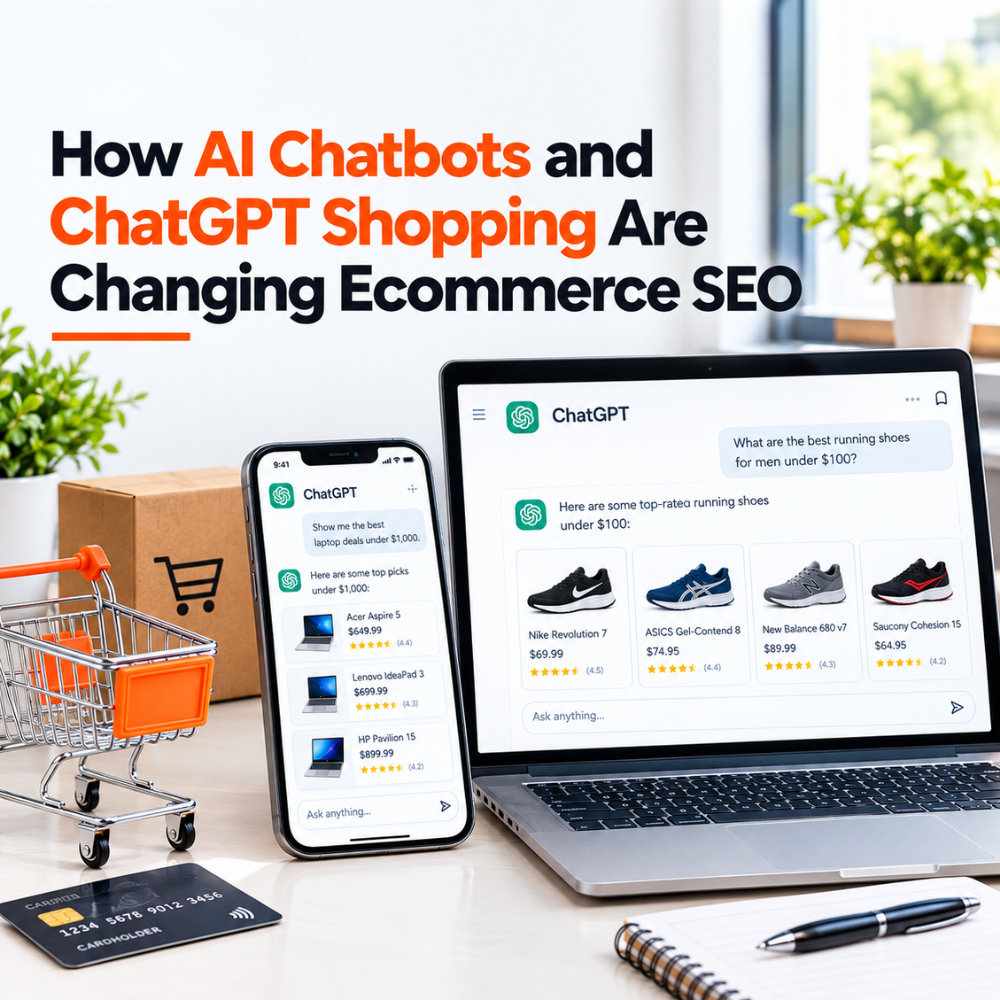
ChatGPT shopping and AI chatbots are changing ecommerce SEO by shifting visibility from ranked blue links to direct product citations inside AI-generated answers. To stay visible globally, you now need structured product data, clear conversational content, and strong reviews, not just traditional keyword rankings.
Key Takeaways
- AI-driven traffic to US retail sites has grown sharply, and AI-referred visitors convert notably better than non-AI traffic, according to Adobe Digital Insights data reported via eMarketer.
- ChatGPT shopping favors stores with clean structured data, clear product specifications, and up-to-date review content over stores optimized only for traditional keywords.
- Answer Engine Optimization (AEO) and Generative Engine Optimization (GEO) now work alongside traditional SEO rather than replacing it.
- Large retailers such as Walmart and Etsy already receive a meaningful share of referral traffic from ChatGPT, showing this shift is measurable, not theoretical.
- Ecommerce brands anywhere in the world can prepare by auditing schema markup, product feeds, and FAQ content built for direct extraction by AI systems.
Type a product question into ChatGPT today, and it may answer with specific recommendations instead of ten blue links. That single shift is quietly rewriting how shoppers discover, compare, and buy products online.
If your ecommerce SEO strategy still targets only Google’s traditional results page, you are optimizing for half the picture. This guide breaks down exactly how AI chatbots and ChatGPT shopping are reshaping ecommerce SEO, and what you can do about it, wherever in the world your store operates.
What Is ChatGPT Shopping, and What Does It Mean for Ecommerce SEO?
ChatGPT shopping refers to product discovery, comparison, and recommendation features built directly into ChatGPT, allowing users to ask conversational questions about products and receive direct answers, comparisons, or links rather than a traditional search results page. It represents a broader category called conversational commerce, where AI chatbots act as an intermediary between the shopper and the store.
Instead of typing a few keywords and scrolling a results page, a shopper can now describe a need in full sentences, “find me a durable, budget-friendly carry-on suitcase”, and receive an already-filtered shortlist.
For ecommerce SEO, this matters because ranking well in Google no longer guarantees visibility. AI systems pull information from product pages, reviews, and structured data to generate their own answers, so your content needs to be understandable to a language model, not just a search crawler.
The same logic applies inside Google: AI Overview panels now sit above traditional results for many commercial queries, summarizing a small set of sources instead of sending every searcher to ten separate websites. This is the foundation of Answer Engine Optimization (AEO), the practice of structuring content so AI systems can extract and cite it directly, which works alongside Generative Engine Optimization (GEO), a discipline Store Transform breaks down further in its guide to GEO, AEO, and AIO strategies.
The practical implication is straightforward: your store can rank well and still lose visibility if an AI system chooses a competitor’s product to cite instead of yours. Winning that citation is now as important as winning the click.
How AI Chatbots Are Reshaping the Ecommerce Search Landscape
The scale of this shift is no longer speculative. Adobe Digital Insights data reported through eMarketer found that AI-driven traffic to US retail sites has surged, with visitors arriving from AI assistants converting noticeably better than non-AI traffic. AI-referred shoppers also spent more time on-site, viewed more pages per visit, and generated meaningfully higher revenue per visit than traffic from traditional channels.
This reversal is significant: not long ago, AI-referred traffic converted worse than average. The behavior of AI shoppers has matured quickly, and ChatGPT now accounts for the large majority of that AI referral traffic share, ahead of Gemini and Perplexity combined. For ecommerce businesses, the takeaway is not that Google is disappearing, it is that a second, fast-growing discovery channel now runs in parallel, with its own optimization rules.
It also explains why AI-referred visitors behave differently once they land on your site. By the time someone clicks through from a chatbot, the assistant has typically already compared options and answered basic questions.
That pre-qualification is why AI-referred shoppers convert at a noticeably higher rate than shoppers arriving from a cold organic search. Your product pages need to close that decision quickly, with clear pricing, availability, and shipping information immediately visible.
Traditional SEO vs. AI Search Optimization: What Actually Changes
Traditional ecommerce SEO and AI-focused optimization overlap heavily but are not identical. The table below breaks down the practical differences you need to plan around.
- Primary Goal
- Traditional Ecommerce SEO: Rank on the search results page.
- AI Search Optimization (AEO/GEO): Get cited or recommended directly in an AI-generated answer.
- Content Format
- Traditional Ecommerce SEO: Keyword-optimized pages, meta tags.
- AI Search Optimization (AEO/GEO): Clear, direct answers; structured Q&A; concise product facts.
- Key Technical Assets
- Traditional Ecommerce SEO: Backlinks, page speed, on-page SEO.
- AI Search Optimization (AEO/GEO): Schema markup such as Product, FAQPage, and Review, along with clean product feeds.
- Trust Signals
- Traditional Ecommerce SEO: Domain authority and backlink profile.
- AI Search Optimization (AEO/GEO): Verified reviews, consistent product specifications, and up-to-date pricing and stock data.
- Success Metrics
- Traditional Ecommerce SEO: Organic rankings and click-through rate.
- AI Search Optimization (AEO/GEO): AI citation frequency and referral conversion rate.
How to Optimize Your Ecommerce Store for AI Chatbots and ChatGPT Shopping
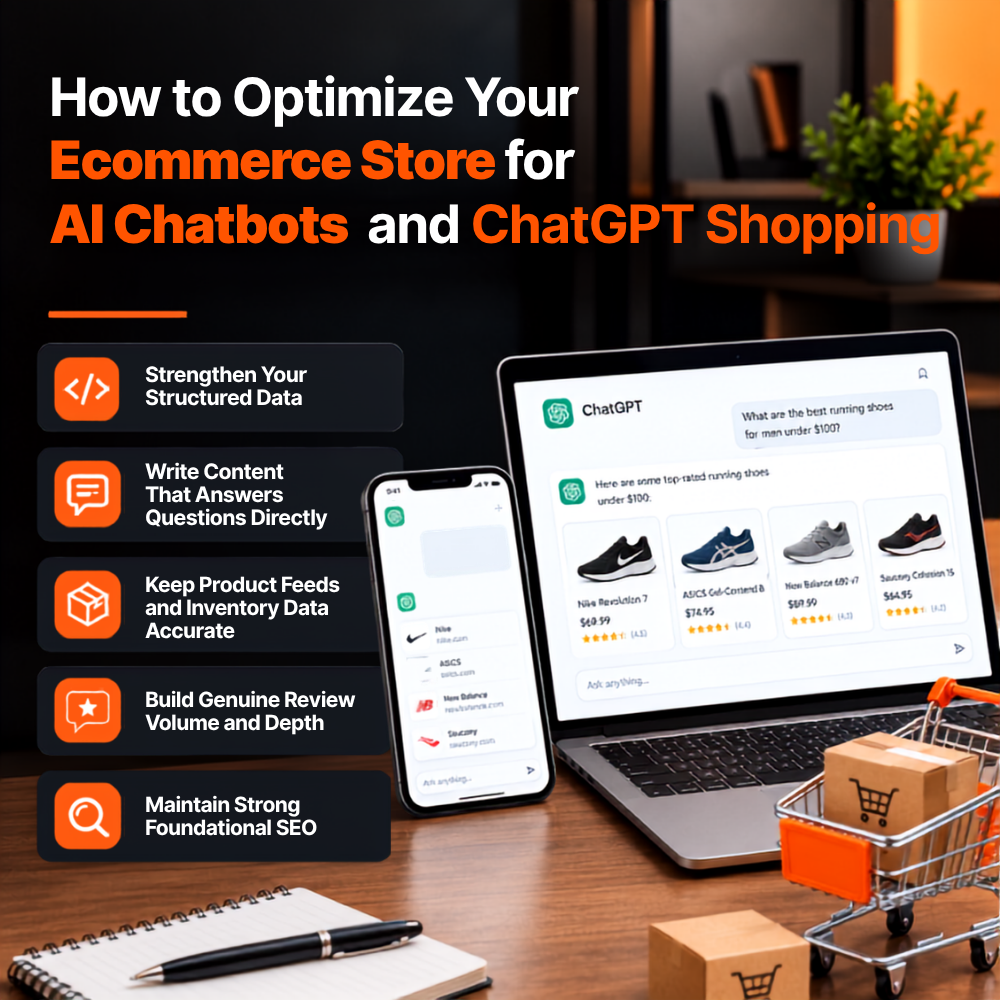
Preparing your store for AI-driven discovery does not mean abandoning traditional SEO, it means layering new practices on top of it.
Strengthen Your Structured Data
AI systems rely heavily on schema markup to understand your products accurately. Product, Offer, Review, and FAQPage schema give ChatGPT and similar tools clean, machine-readable facts to cite, reducing the chance your listing is skipped or misrepresented. Missing or incomplete schema is one of the most common reasons a well-ranking product page still gets left out of an AI-generated answer.
Write Content That Answers Questions Directly
Product pages and blog content should answer real customer questions in plain language near the top of the page, rather than burying specifications under marketing copy. This is the same principle behind voice search optimization, and it applies just as directly to chatbot-driven shopping queries.
A short, direct paragraph answering “what is this product best for” near the top of the page gives an AI model an easy, quotable fact to extract.
Keep Product Feeds and Inventory Data Accurate
AI shopping tools increasingly favor stores with reliable, current stock and pricing data. Outdated feeds risk your products being excluded from AI-generated recommendations entirely, since an assistant that cites an out-of-stock item damages its own credibility with the user and will avoid the source next time.
Build Genuine Review Volume and Depth
Detailed, verifiable reviews are a major trust signal that AI models draw on when comparing products. Thin or generic review content is easy for these systems to deprioritize in favor of a competitor with more specific, detailed customer feedback covering fit, durability, and real usage.
Maintain Strong Foundational SEO
AI search optimization does not replace traditional SEO, it builds on the same technical and content foundation. A well-structured, fast, mobile-friendly ecommerce site remains the base layer every AI optimization strategy depends on, a principle Store Transform applies across every SEO engagement and ecommerce web development, including the platform-specific guidance in our Shopify development and AI-SEO guide.
Skipping this foundation to chase AI-specific tactics tends to backfire, since AI systems still favor pages that already perform well in traditional search.
Real-World Example: Established Retailers Are Already Capturing AI Referral Traffic
This shift is already visible in referral data from major retailers. Independent referral-traffic analyses have found that ChatGPT drives a substantial share of Etsy’s and Walmart’s referral traffic, while Target and eBay also receive measurable volume from the same source; exact percentages vary by analytics provider and reporting period.
Amazon, by contrast, receives comparatively little AI referral traffic relative to its size, a gap analysts attribute largely to how its product data is structured for machine readability.
The pattern is consistent: stores with clean, easily parsed product information get recommended most often, regardless of overall brand size or advertising budget. A mid-sized retailer with disciplined structured data can outperform a much larger competitor in AI citation share.
What This Means for Global Ecommerce Brands
Because AI chatbot adoption is not confined to one country or region, this shift applies to ecommerce brands operating anywhere in the world, not just in the United States. Whether you sell to customers in North America, Europe, or Asia-Pacific, the underlying requirement is the same: your product data, reviews, and content need to be structured for machine comprehension as much as human readability.
Store Transform works with ecommerce businesses globally on exactly this kind of AI-readiness audit, connecting AI-driven SEO strategy with practical digital marketing execution.
Conclusion
ChatGPT shopping and AI chatbots are expanding what “visibility” means for ecommerce SEO, not replacing the discipline itself. Stores that pair strong technical SEO with clean structured data, direct-answer content, and credible reviews are best positioned to be found and recommended by both search engines and AI assistants. If you want a clear-eyed audit of where your store stands, talk to Store Transform about an AI-readiness review.
Frequently Asked Questions
What is ChatGPT shopping?
ChatGPT shopping refers to product discovery and recommendation features inside ChatGPT that let users ask conversational questions about products and receive direct answers, comparisons, or purchase links instead of a traditional search results page.
How is AI changing ecommerce SEO?
AI is changing ecommerce SEO by shifting some product discovery away from ranked search results and into direct answers generated by chatbots. This requires structured data, clear content, and credible reviews in addition to traditional keyword and backlink strategies.
Is ChatGPT shopping the same as Google Shopping?
No. Google Shopping displays product listings within Google’s search results based on product feeds and ads. ChatGPT shopping generates conversational recommendations based on how well a chatbot can interpret your product data and content.
How can I get my products recommended by ChatGPT?
Focus on accurate structured data (Product and Offer schema), clear and current product specifications, genuine customer reviews, and content that directly answers common buying questions. These factors influence whether AI systems can confidently cite your products.
Will AI chatbots replace Google search for ecommerce?
Current data does not support full replacement. AI referral traffic is growing quickly, but Google search still drives the majority of ecommerce discovery. The realistic approach is optimizing for both channels rather than choosing one over the other.
Does this affect ecommerce businesses outside the United States?
Yes. Most published data comes from US retail sites, but AI chatbot adoption is global, so ecommerce businesses in any region benefit from the same structured-data and content practices described in this guide.
What is Answer Engine Optimization (AEO)?
Answer Engine Optimization is the practice of structuring website content, through schema markup, direct-answer paragraphs, and clear FAQs, so AI systems like ChatGPT, Google AI Overview, and Perplexity can extract and cite it accurately in their generated answers.