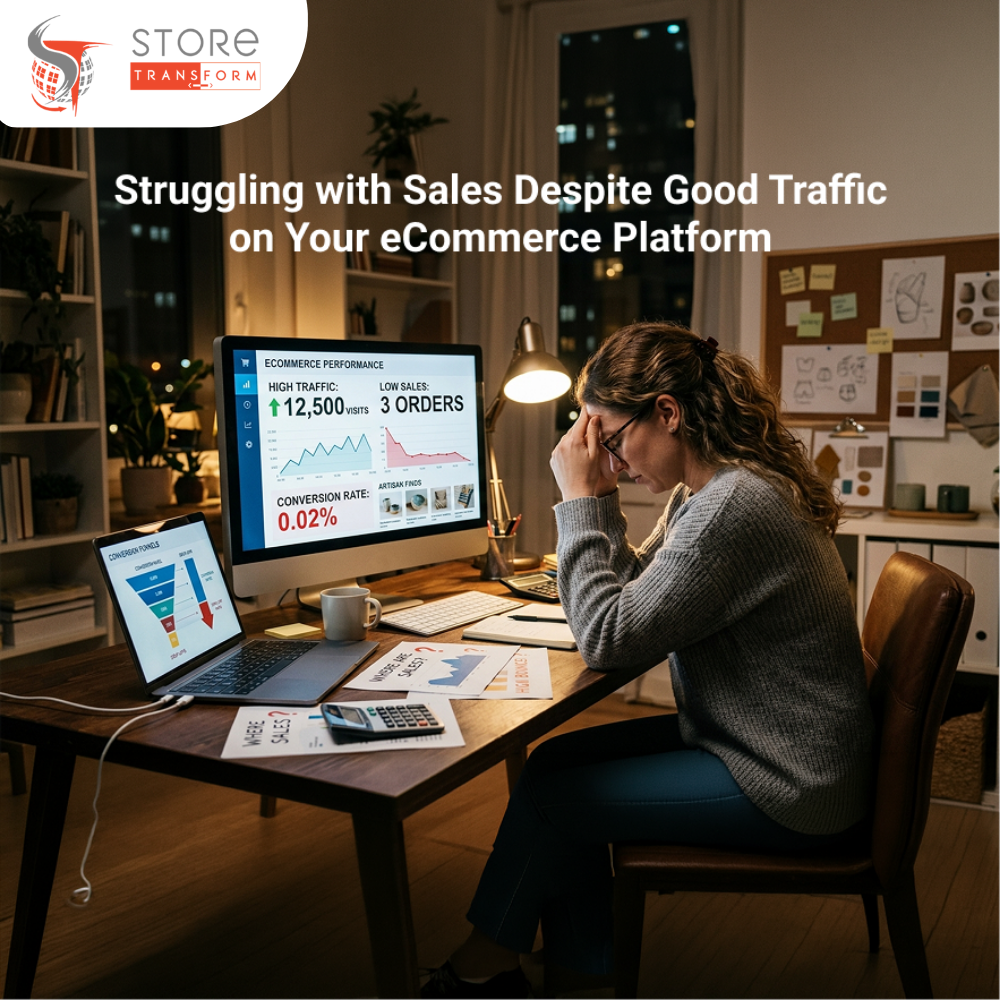
You’re getting traffic to your eCommerce website. Visitors are browsing your products, clicking through pages, and spending time on your store, but the sales just aren’t happening. If this sounds familiar, you’re not alone. Many businesses struggle with high traffic but low sales in ecommerce, often wondering why their ecommerce website is not converting visitors into customers.
The numbers reveal just how serious this problem is. Research from Baymard Institute shows that the average ecommerce cart abandonment rate is around 70.22%, meaning 7 out of 10 shoppers abandon their carts.
At the same time, the ecommerce industry itself is growing rapidly. According to Statista, global ecommerce revenue is expected to reach about $4.96 trillion by 2030, with billions of users shopping online every year. So if ecommerce is growing, why are so many stores struggling with high traffic but low sales?
Here, we’ll explore why ecommerce websites attract visitors but fail to convert them, and what businesses can do to improve ecommerce conversion rate and turn traffic into real revenue.
The Conversion Gap: Why eCommerce Traffic Doesn’t Always Lead to Sales
You’re getting plenty of visitors, but your ecommerce website isn’t converting them into customers. Sounds familiar? This is what we call the “conversion gap.”Common reasons include:
- Poor website UX and navigation design
- Weak product page content and trust signals
- Slow page load speed is killing buyer intent
- A broken or confusing checkout funnel
- Misaligned audience targeting and messaging
By identifying and fixing these issues, you can close the conversion gap, reduce wasted traffic, and turn more visitors into paying customers.
Common Reasons Your eCommerce Store Gets Traffic but No Sales
Many businesses struggle with high traffic but low sales in ecommerce, often wondering why their ecommerce website is not converting visitors into customers.
The problem usually lies in hidden conversion issues that directly impact your ecommerce conversion rate optimization efforts.
Is Your Website Easy to Use for First-Time Visitors?

First impressions matter in ecommerce conversion rate optimization. Page speed is the single most overlooked revenue killer. Research from Google confirms that 53% of mobile users will abandon a page that takes longer than 3 seconds to load. On Magento and WooCommerce stores with heavy theme customizations and unoptimized images, load times routinely exceed 6–8 seconds
- Poor website usability is a key reason why an ecommerce website is not converting visitors into customers.
- Confusing navigation and unclear categories reduce user engagement and ecommerce conversion rates.
- Too many clicks to find products creates friction and increases bounce rates.
- Lack of intuitive design impacts website usability and conversion rate optimization.
- A user-friendly interface improves ecommerce performance, engagement, and sales.
At StoreTransform, we help businesses identify usability gaps using data and AI-driven insights, then optimize website structure, navigation, and performance to improve ecommerce conversion rates and turn traffic into real sales.
Are Your Product Pages Convincing Enough to Drive Sales?

Your product pages are where buying decisions happen. Even if your ecommerce store gets traffic but no sales, poorly optimized pages can stop visitors from converting.Here are the reason why:
- Images are low-quality, missing zoom, or lack multiple angles.
- Product descriptions are copied from the manufacturer’s generic, benefit-free.
- No social proof: zero reviews, no star ratings, no ‘as seen in’ badges.
- The Add to Cart button is buried below the fold or poorly contrasted.
- No urgency triggers: no stock counters, no limited-time offer banners.
Tip :
Make your product pages easy to understand and persuasive with strong visuals and customer reviews. A well-optimized page reduces drop-offs and increases ecommerce sales conversions.
Is Your Checkout Process Causing Customers to Drop Off?
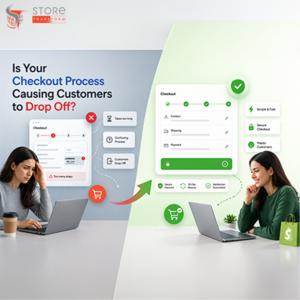
You’ve done the hard work of bringing visitors to your store, but are they leaving at checkout?
A complex or confusing process can stop users from completing purchases, hurting your ecommerce sales conversions.
- A complicated checkout is a major reason for high cart abandonment rates in ecommerce.
- Too many steps or forced account creation can hurt your ecommerce conversion rate optimization.
- Lack of guest checkout options creates friction and leads to drop-offs.
- Unexpected costs like shipping or taxes reduce trust and impact ecommerce sales conversions.
- A slow or unoptimized checkout page can result in high traffic but low sales in ecommerce.
Do Customers Trust Your Website Enough to Buy?
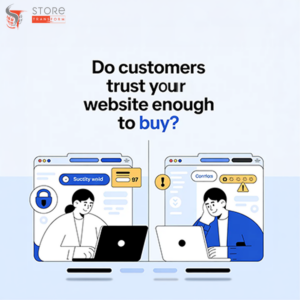
Visitors may like your products, but if they don’t trust your website, they won’t buy.
A lack of trust signals is a common reason ecommerce websites fail to convert visitors into customers.
- If customers don’t feel safe, they won’t complete the purchase, even with strong traffic.
- Lack of reviews, testimonials, and real user feedback affects ecommerce sales conversions.
- Poor website design or an outdated layout can reduce credibility and trust.
- Missing contact details or support information makes your store look unreliable.
- Building trust helps reduce high traffic but low sales in ecommerce and improves conversions.
Is Your Website Speed Hurting Your Conversions?
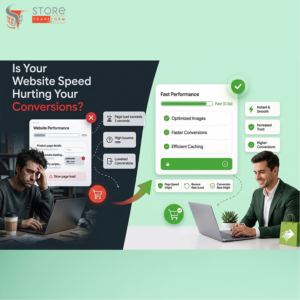
If your website takes too long to load, visitors won’t wait until they leave.
Slow performance is a major reason many ecommerce websites fail to convert visitors into customers.
- Slow-loading pages are a key reason for low ecommerce conversion rates.
- Delays in page speed increase bounce rates and reduce user engagement.
- Poor website performance leads to high traffic but low sales in ecommerce.
- Unoptimized images, heavy scripts, and poor hosting affect website speed optimization.
- Faster websites improve user experience, SEO rankings, and ecommerce sales conversions.
Is Your Ecommerce Store Fully Optimized for Mobile Users?

Most shoppers today browse and buy using their smartphones, but is your store ready for them? A poor mobile experience is a common reason ecommerce websites fail to convert visitors into customers.
- Mobile users expect a smooth and fast shopping experience across all pages.
- If your store isn’t optimized, users may leave before completing a purchase.
- Difficult navigation, small buttons, and poor layouts reduce mobile ecommerce conversions.
- Slow mobile performance negatively impacts website usability and sales.
- Optimizing for mobile helps turn traffic into customers and improve ecommerce performance.
Are You Using Data and AI to Understand User Behavior?

Do you really know how visitors interact with your website?
Without AI-driven analytics, it’s difficult to identify why your ecommerce website isn’t converting visitors into customers, and thus improve this focus.
- Lack of data insights is a major reason for low ecommerce conversion rates.
- Without tracking user behavior, it’s difficult to identify drop-off points in the customer journey.
- AI-powered analytics tools help analyze clicks, scrolls, and engagement patterns.
- Data-driven decisions improve conversion rate optimization and campaign performance.
- Using AI helps reduce high traffic but low sales in ecommerce and increases ROI.
From Browsers to Buyers: Strategies to Fix Low eCommerce Conversion Rates
If you have steady traffic but stagnant sales, your problem isn’t visibility; it’s conversion rate optimization (CRO). To turn those visitors into paying customers, you need to remove friction, build trust, and create urgency.
1. Optimize Your Product Pages for Clarity
A visitor should know exactly what they are buying within three seconds. If your product pages are cluttered or vague, they will bounce.
- High-Resolution Visuals: Use zoom-enabled photos and short product videos to mimic the “in-store” experience.
- The “Benefit-First” Description: Don’t just list features. Explain how the product solves a specific problem for the customer.
- Clear Calls-to-Action (CTAs): Your “Add to Cart” button should be high-contrast and placed “above the fold” (visible without scrolling).
2. Streamline the Checkout Experience
The average shopping cart abandonment rate is nearly 70%. Most of the time, it’s because the checkout process is too long or complicated.
- Enable Guest Checkout: Don’t force users to create an account before they buy.
- One-Page Checkout: Minimize the number of steps and form fields required to complete a purchase.
- Multiple Payment Options: Support digital wallets such as Apple Pay, Google Pay, and PayPal to enable “one-click” buying.
3. Leverage Social Proof and Trust Signals
Online shopping requires a leap of faith. If your site feels “empty” or untrustworthy, visitors won’t hand over their credit card details.
- User-Generated Content (UGC): Display real customer photos and honest reviews.
- Trust Badges: Show secure checkout icons (SSL) and clear “Money-Back Guarantee” badges.
- Live Chat Support: Real-time assistance can answer a pre-purchase question that would otherwise prevent a sale.
4. Create Strategic Urgency and Scarcity
Sometimes, a visitor just needs a little nudge to stop “thinking about it” and start buying.
- Limited-Time Offers: Use countdown timers for flash sales or discount codes.
- Low-Stock Alerts: “Only 3 left in stock!” creates a fear of missing out (FOMO).
- Incentivize Immediate Action: Offer “Free Shipping for the next 2 hours” to push hesitant browsers over the finish line.
5. Retargeting: Bringing Back the “One That Got Away.”
Not everyone buys on their first visit. In fact, most don’t.
- Abandoned Cart Emails: Send an automated reminder (perhaps with a small discount) to users who left items in their cart.
- Retargeting Ads: Use social media ads to show the exact products a visitor viewed, keeping your brand top of mind.
Pro Tip: Check your site speed. A one-second delay in page load time can reduce conversions by 7%. Before you change your copy, make sure your site is fast and mobile-friendly!
At StoreTransform, we don’t just build websites; we engineer sales machines. Our comprehensive eCommerce development services help you identify conversion gaps, optimize your platform, and implement AI-driven strategies to maximize your conversion rates and overall sales performance.
Quick Wins: 5 Things You Can Fix in the Next 48 Hours
Not everything requires a developer or a big budget. Here are five high-impact changes you can make right now:
- Add free shipping for orders above a threshold and display it prominently in a sticky header bar.
- Install Microsoft Clarity (free) and watch 10 session recordings of users who didn’t convert.
- Set up a 3-email abandoned cart sequence (1 hour, 24 hours, 72 hours post-abandonment).
- Run your store through Google PageSpeed Insights and implement the top 3 recommendations.
- Add your store’s return policy, customer support email, and SSL badge to your product page template.
Turn High Traffic into High Conversions with StoreTransform
Getting traffic to your store is only half the battle. What truly matters is how well you convert that traffic into paying customers. From improving website usability and product page optimization to simplifying checkout and leveraging AI-driven ecommerce strategies, every step plays a role in boosting your ecommerce conversion rates.
If you’re still facing high traffic but low sales in ecommerce, working with experts like StoreTransform can help you identify gaps, optimize performance, and turn visitors into real revenue. Contact us today and start converting more visitors into customers.
FAQs
1. Why do I have traffic but no sales on my eCommerce store?
High traffic with low sales typically indicates a problem with conversion rates. This usually stems from poor product page design, unclear value propositions, slow page load times, trust issues, a complicated checkout process, or misaligned traffic (visitors aren’t your target customers).
2. What is a good ecommerce conversion rate?
The average ecommerce conversion rate ranges between 2%–4%, but it varies by industry, traffic quality, and website optimization.
3. How can I improve my eCommerce conversion rate?
Key tactics include optimizing product pages with high-quality images and clear descriptions, reducing checkout steps, adding trust signals (reviews, security badges), improving page speed, mobile optimization, enhancing product recommendations, simplifying navigation, and running retargeting campaigns. A/B testing each element reveals what works for your specific audience.
4. How does website speed affect ecommerce sales?
Slow-loading pages increase bounce rates and reduce ecommerce conversions, as users prefer fast and seamless shopping experiences.
5. What role does UX design play in ecommerce conversions?
Good UX design makes browsing easy, builds trust, and improves ecommerce conversion rates by guiding users toward purchase decisions.
6. Does SEO help increase ecommerce sales?
Yes, SEO brings targeted traffic, but combining it with conversion rate optimization is key to turning visitors into customers.
7. How can I improve my ecommerce conversion rate and increase sales effectively?
If your store has high traffic but low sales, the issue is usually hidden in your conversion funnel. At StoreTransform, we analyze user behavior and optimize your store to turn visitors into customers. Contact us to improve your conversions.